
Your First Visit, Start to Finish: What a Comprehensive Dental Exam Really Involves
Booking a first appointment and wondering what actually happens in that chair? A comprehensive exam is an evaluation, not a cleaning. Dr. Allen and the team at Allen Family Dentistry spend that visit gathering a complete record of your mouth, from the bone under your gums to the way your teeth meet when you bite down, then walking you through what it all means. Plan on it running longer than the quick checkups you may be used to.
One scheduling note before you come in: your insurance, medical information, and new patient forms must be received at least two days before your appointment. Forms received after that window result in a cancelled appointment.
Prefer to speak with someone directly? Call whichever location is closest. Athens: (903) 675-3811. Palestine: (903) 723-5816. Bullard: (903) 710-2309.
What This Guide Covers
- How a comprehensive new-patient exam differs from a recall checkup, an emergency visit, or a routine cleaning.
- What digital X-rays, 3D cone beam imaging, and intraoral camera photos reveal, including a straightforward answer to the radiation question.
- What the numbers mean when gums are measured, why gum health determines the order of everything else.
- Whether a cleaning happens the same day, what determines that decision.
- How findings become a treatment plan built with your input.
- What comes next: visit frequency, home care, how the exam adapts for children, teens, and adults returning after years away.
Before your visit: insurance, medical information, and new patient forms are due at least two days before your appointment. Forms received after that window result in a cancelled appointment. Reach us at Athens (903) 675-3811, Palestine (903) 723-5816, Bullard (903) 710-2309.
What Is a Comprehensive Dental Exam, and How Is It Different From a Cleaning or Checkup?
Patients use "exam," "checkup," and "cleaning" interchangeably. That is where most of the confusion starts. Each is a distinct appointment with a distinct purpose.
The Comprehensive New-Patient Exam
This is the full baseline: health history, imaging, photos, gum measurements, a tooth-by-tooth look, bite and jaw evaluation, soft-tissue screening, a thorough conversation about findings. Nothing gets diagnosed off a hunch. Everything is documented. Plan on the better part of an hour and a half. Every new patient starts here.
One scheduling note: insurance and medical information, along with new patient forms, must be received at least two days before the visit. Forms received after that window result in a cancelled appointment.
The Periodic Recall Checkup
With a baseline in place, follow-up visits become comparisons. The focus is on what changed since last time: new decay, gum measurements that shifted, a filling beginning to fail, wear that is progressing. Plan on 45 minutes to an hour. These visits draw directly from the records built at that first appointment.
The Limited or Emergency Exam
A tooth cracked. Something swelled. This exam is narrow on purpose. The focus is on the problem, getting the patient comfortable, handling the urgent issue. Most run 30 to 45 minutes. This is a triage visit, not a full evaluation. A comprehensive exam typically follows after the immediate concern is resolved.
Insurance plans often steer patients toward the shortest version of all three. At Allen Family Dentistry, exams are built around what actually produces an accurate diagnosis. That is one reason the membership plans here carry no annual maximums or visit caps.
The Health History Conversation: Why It Comes Before Anything Else
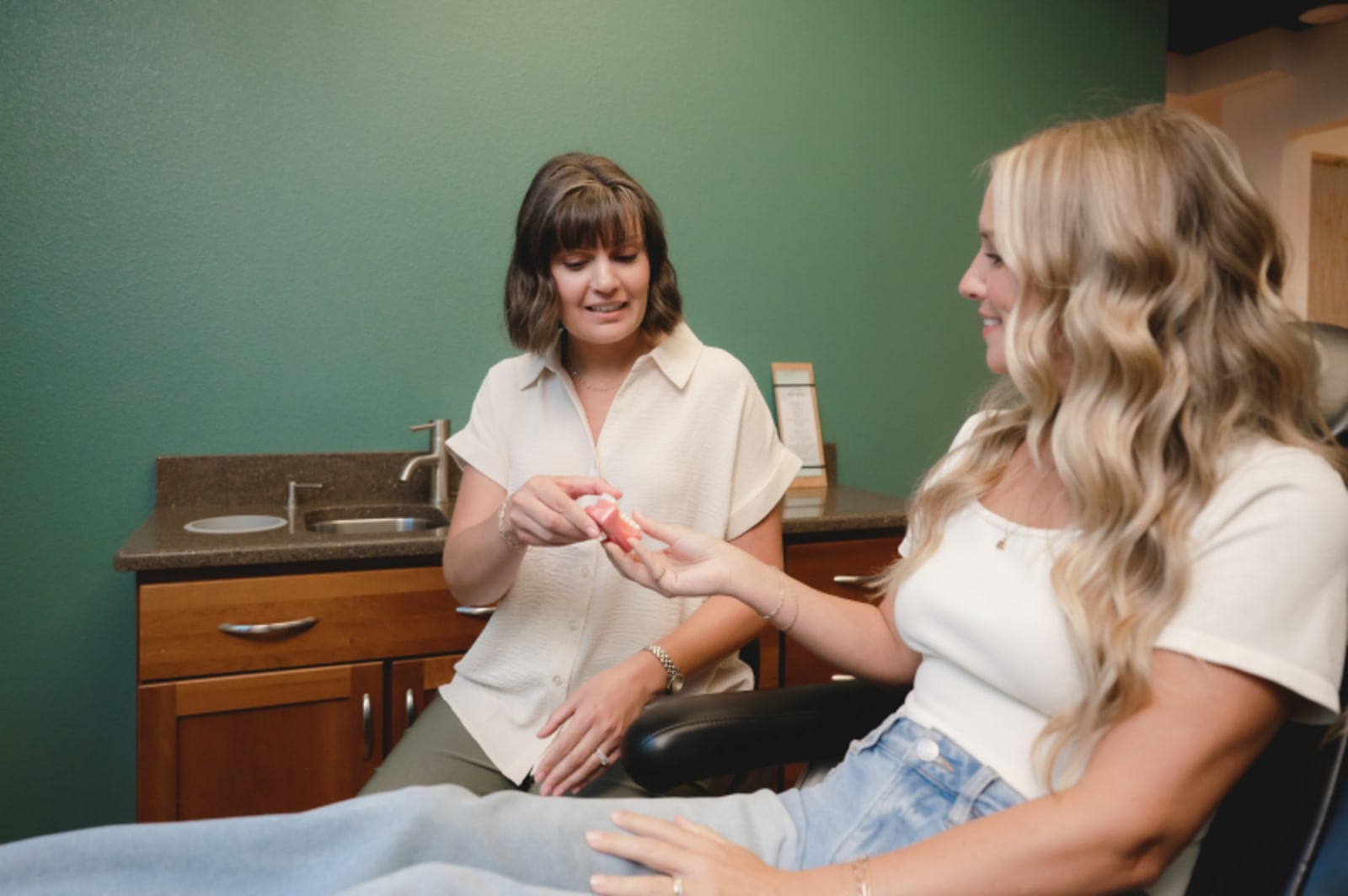
The visit opens with a conversation, not an instrument. Not a clipboard filled out alone in the waiting room, handed to a stranger. A genuine back-and-forth about your health, your life, what you want from your smile.
Your mouth is not sealed off from the rest of you. Diabetes, cardiovascular disease, autoimmune conditions: all influence gum health. Inflamed gums push back on those conditions in turn. Blood thinners change how certain procedures are planned. Many common prescriptions cause dry mouth. Less saliva means more cavities, sometimes in people who have never had one before.
Things we want to hear about:
- Current medications, supplements, anything that changed recently
- Medical conditions, surgeries, joint replacements, heart valve history
- Past dental experiences, especially the ones that went badly
- Whether you clench, grind, snore, or wake up tired
- What you actually want: fresher breath, a brighter smile, staying ahead of problems before they become costly
That last point carries more weight than most people expect. You know what you want from your smile. Sharing that with us shapes what we recommend, in what order.
One practical note: insurance information, medical details, new patient forms are required at least two days before your appointment. That gives the doctor time to review your history before you sit down, not in the hallway. Without those forms two days ahead, the appointment is cancelled.
Digital X-Rays and 3D Cone Beam Imaging: Seeing What the Eye Cannot
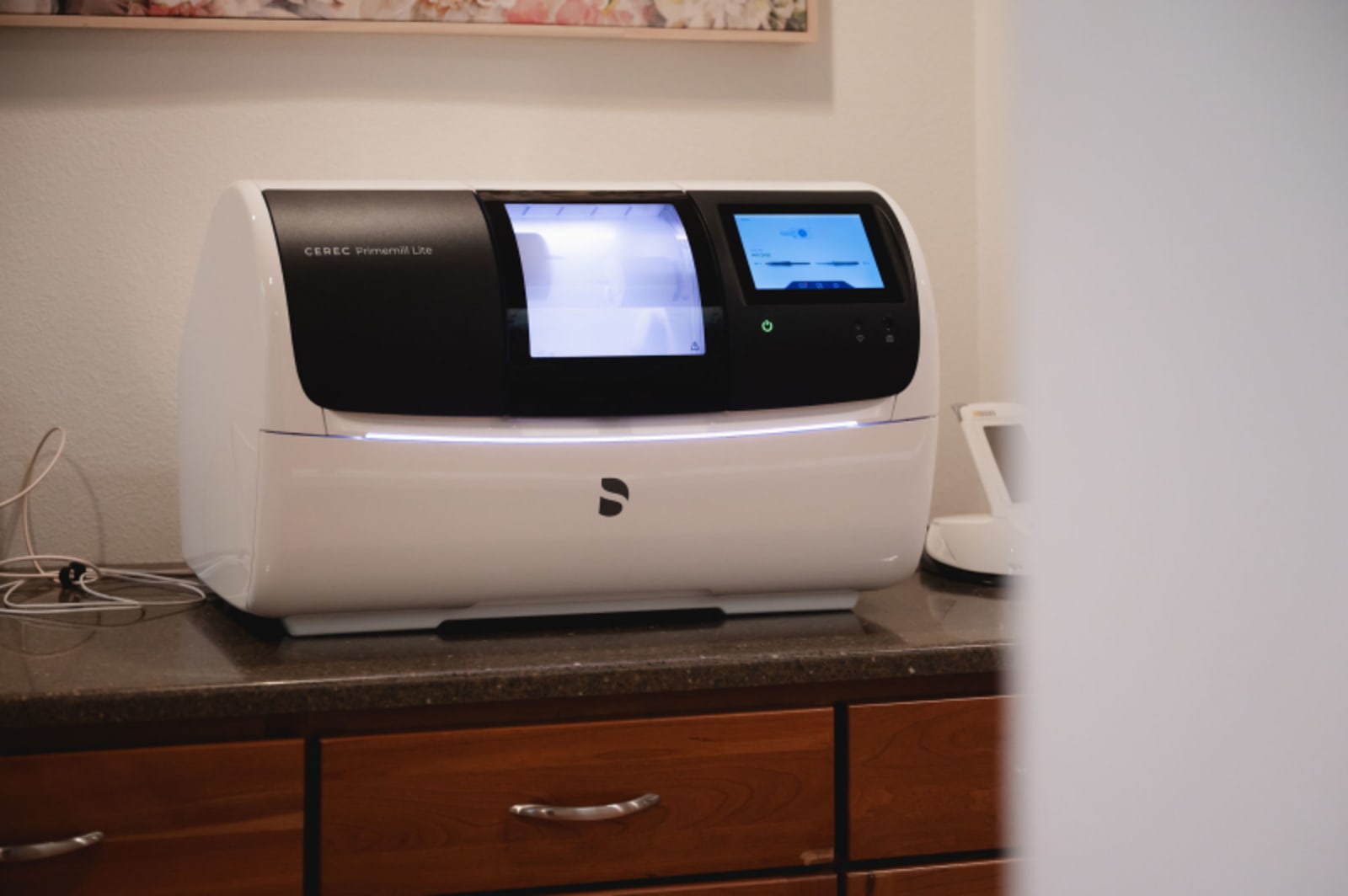
An eye and a mirror reveal maybe half of what matters. Decay starting between two teeth, bone quietly receding, an abscess forming at a root tip: none of that is visible until it has advanced. Imaging fills in the rest of the picture.
Bitewing X-Rays
These small images show the crowns of upper and lower teeth together. They are the workhorses for finding decay between teeth; they also check bone height at the gumline.
Panoramic Imaging
One wide, flat image of both jaws, the sinuses, the joints. Useful for spotting impacted wisdom teeth, cysts, how everything relates to everything else. Fine detail, however, is better captured by a bitewing.
3D Cone Beam (CBCT) Imaging
Every new patient receives 3D cone beam imaging. We work with a full volume, scrollable from any angle. That matters for evaluating bone in three dimensions before implant treatment, tracing the true path of a root, assessing the jaw joints, reviewing airway anatomy. Having this technology in-house on day one means the plan we build is grounded in measurements, not estimates.
The Radiation Question
That is a fair question, one we welcome. Digital sensors require far less radiation than the film they replaced. We take only what is diagnostically necessary, never a standard set of images regardless of need. Low exposure, high diagnostic value, far fewer surprises later.
Allen Family Dentistry does not accept X-rays from other providers. Outside images arrive at varying angles, often missing the 3D data we rely on. We will not make a diagnosis from an image we cannot verify.
One scheduling note that keeps your first visit on track: insurance, medical information, along with new patient forms are due at least two days before your appointment. Without them, the appointment is cancelled. We look forward to seeing you.
Intraoral Camera Photos: Your Mouth, Explained in Real Time
For everything happening at the surface, the intraoral camera does the explaining. A small pen-shaped device captures high-resolution images of individual teeth and gum tissue. Those images appear on a screen right in front of you as we work.
When we mention a hairline crack in a back molar or a filling with a dark margin around the edge, you are looking at the same magnified image we are. Speak up when a recommendation does not make sense from the picture. We are happy to keep talking until it does.
These photos stay in your record. A worn spot we decide to monitor this year can be compared against the same tooth next year. That comparison turns a subjective impression into a documented measurement. Longitudinal records like this are central to how we approach dentistry for every member of your family.
Periodontal Charting: The Measurements Most Patients Have Never Had Explained
Most patients have heard someone call out numbers while measuring their gums. Few have ever had those numbers explained. Here is what is happening.
A small probe measures the space between each tooth and the surrounding gum tissue at six points per tooth. Healthy tissue fits snugly against the tooth, keeping those readings shallow. Deeper readings indicate the attachment has pulled away, leaving space where bacteria can settle beyond the reach of any toothbrush. The charting also captures recession where gums have crept back, areas that bleed on contact, and any tooth showing more movement than it should.
Gums and bone hold teeth in place. This assessment comes before anything cosmetic or restorative. A beautiful crown placed on a tooth with failing support is a short-term crown. Veneers on inflamed tissue look wrong and wear poorly. Implants require stable bone to succeed. The gum and bone evaluation sets the order of everything else. On occasion, it changes the plan entirely.
Gum disease tends to move quietly. It rarely causes pain during the stages when it is easiest to reverse. Measuring matters more than waiting for symptoms.
The Clinical Examination: Tooth by Tooth, Bite, Jaw, and Oral Cancer Screening
With history and imaging in hand, the hands-on portion covers considerably more ground than most patients expect.
Teeth and Existing Dental Work
Each tooth gets looked at individually: soft spots and decay, the condition of fillings and crowns already in place, leaking margins, chips, and cracks. Older dental work usually gives signals before it fails. Catching those signals early is far less costly than catching the fracture. When a tooth needs rebuilding, our same-day crowns eliminate the temporary and the wait.
Wear Patterns
Teeth keep a record of what is done to them. We read it carefully. Flattened cusps, thinning enamel on the inside of front teeth, small notches at the gumline: these patterns often point to nighttime grinding or clenching, occasionally to acid from reflux or diet. Identifying the cause determines whether the answer is a night guard, a conversation about diet, or a referral for the reflux.
Bite and Jaw Joints
Morning jaw soreness, headaches, and ears that feel full often trace back to this part of the exam. We evaluate how the teeth come together, whether contact is even, and how the joints move, click, or catch. Findings that suggest a joint or muscle issue lead to a focused conversation about TMD care.
Airway and Sleep Signs
Scalloped tongue edges, a narrow palate, worn teeth paired with morning headaches, a history of snoring: together these can point toward disrupted breathing at night. A dental exam does not diagnose sleep apnea. Recognizing the pattern, discussing oral appliance therapy, and identifying the right moment to involve a sleep physician are all part of a thorough evaluation.
Oral Cancer Screening
The final few minutes are devoted to the soft tissue of the tongue, floor of the mouth, cheeks, palate, throat, and lips, along with a careful feel of the neck and jaw for anything that should not be there. The screening is painless and quick. It is the step most often missed when someone goes years between visits. Catching a suspicious area early is what makes it treatable.
Will You Get a Cleaning at the Same Appointment?
That is a fair question, worth answering before the visit rather than after. A comprehensive exam is a diagnostic appointment. We do not promise a cleaning as part of it. There is a clinical reason for that.
Until the gum measurements are complete, nobody knows which kind of cleaning is appropriate. A routine hygiene visit is designed for healthy gums with shallow readings and surface buildup. When charting reveals deeper pockets, bleeding, and bone loss, a standard polish can leave active infection in place while making things look tidier on the surface. That calls for periodontal therapy. Deeper cleaning below the gumline, sometimes with our soft tissue laser, typically spans more than one appointment.
The exam determines the cleaning, not the other way around. Some patients leave that first visit with hygiene scheduled as routine maintenance. Others leave with a periodontal plan. The path forward is clear before anyone leaves the chair. One scheduling note: insurance and medical information along with new patient forms are due at least two days before the appointment, or the appointment is cancelled.
Reviewing Findings and Building a Treatment Plan Together
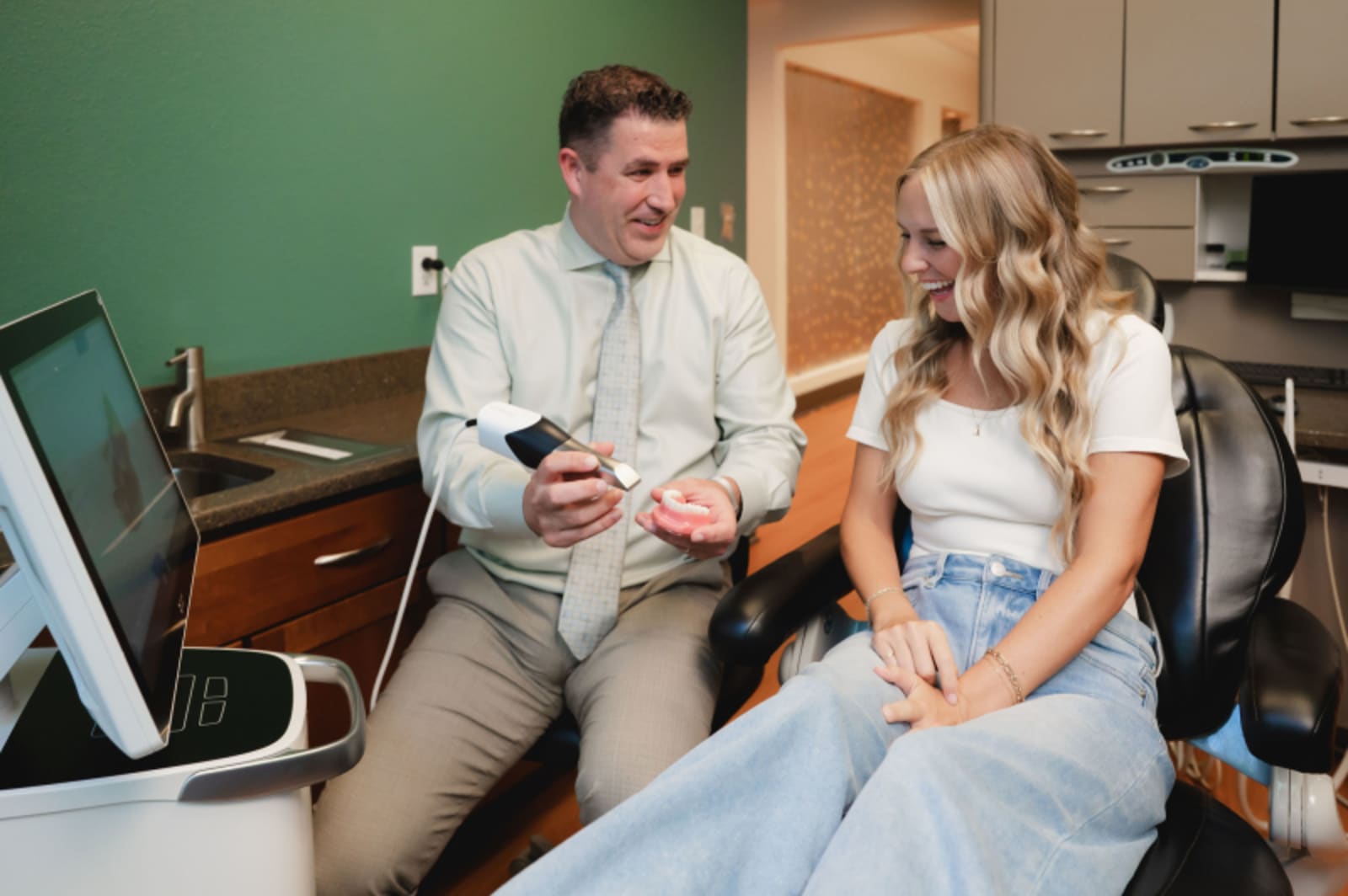
All of that information only matters when someone takes the time to explain it. No printout handed across a counter, no pointing toward the front desk. We sit down, pull up your images and photos, walk through what was found, what it means, what your realistic options are.
Findings generally sort into tiers. Naming the tier matters as much as naming the problem:
- Needs Attention Now: Active infection, pain, a fractured tooth, decay close to the nerve. Waiting costs tooth structure and money.
- Should Be Addressed Soon: A cracked filling, moderate decay, early gum issues. Time to plan. Not time to forget.
- Watch and Monitor: A small wear facet, a stable old restoration, a shallow spot that has not changed. We document it, photograph it, compare it at your next visit.
- Elective and Cosmetic: Whitening, aligners, veneers, gum contouring. Yours to decide on your own timeline, once the health side is stable.
More than one reasonable route often exists. We lay the options side by side: how long each tends to last, what it looks like, what it involves, what doing nothing costs you. A crown versus watching a cracked tooth. An implant versus a bridge versus a partial denture.
Ask questions, push back, say "not this year" on any of it. No one will pressure you into a same-day decision. A plan you do not fully understand is a plan you are unlikely to finish.
What the Exam Looks Like for Children, Teens, and Adults Who Have Not Been in Years
The structure of a comprehensive exam stays consistent. The way it is delivered shifts considerably depending on who is in the chair.
Young Children
First visits for little ones are mostly about comfort and curiosity. We show each tool before we use it, keeping the pace unhurried. Beyond checking for decay, we are watching how their smile is developing: how baby teeth are spacing out, whether permanent teeth have room to arrive, including habits like thumb sucking or mouth breathing that can shape those early years. When a tight lip or tongue attachment is limiting feeding or speech, a frenectomy may come up as an option. Parents are welcome right there beside us throughout the visit.
Teens
Teen exams include an orthodontic evaluation: crowding, spacing, how the bite is settling, wisdom teeth that appear on the 3D scan before they cause trouble. This is a natural window for clear aligner conversations. Our in-house Straight A's aligners mean that discussion happens with the same team that already knows the rest of their mouth. We also speak directly with teens about the habits that quietly damage enamel, sports drinks and vaping among them, keeping the tone conversational, never preachy.
Adults Who Have Been Away a Long Time
Five years away or fifteen, there is no judgment here. We begin with imaging and a thorough look, then build a treatment sequence in an order that feels manageable, never overwhelming. For patients who carry dental anxiety, oral conscious sedation is available. Small adjustments make a real difference: knowing what comes next, agreeing on a signal to pause, breaking work into shorter visits when that helps.
After Your Exam: Recall Intervals, Home Care, and Where Your Plan Goes From Here
The exam produces two things: a plan for anything that needs attention, paired with a rhythm for keeping problems from developing in the first place.
How Often You Will Come Back
Every six months is the default, not a rule. Your interval is shaped by your risk profile. Stable gums, low decay history, good home care, minimal grinding: six months is appropriate, sometimes longer. A history of periodontal disease, dry mouth from medication, deep grooves that trap decay, or a mouth full of older restorations calls for three or four months, catching change while it is still manageable. We will tell you which category applies to you and why.
Home Care That Actually Changes Outcomes
Brush twice a day with a soft brush and fluoride toothpaste. Clean between teeth daily in whatever form you will genuinely maintain. Pay attention to how often sugar and acid contact your teeth, not just how much. A night guard protects enamel that does not grow back if grinding is a factor. When dry mouth is a concern, we will walk through products that make a real difference. Two habits you will actually keep are worth far more than a list of ten you will not.
Where the Plan Goes From Here
For most patients, the path forward is preventive: regular hygiene visits, monitoring a few documented areas, nothing dramatic. For others, findings lead into restorative work such as same-day CEREC crowns, root canal therapy, implants, or implant-supported dentures. Some plans move toward orthodontics with our in-house clear aligners, others toward cosmetic work, others still toward full-mouth rehabilitation where the bite is rebuilt in carefully sequenced stages.
Ready to Start With a Real Baseline?
A first visit at Allen Family Dentistry is meant to feel unhurried. A mouth is complicated. You deserve to understand yours. Dr. Allen, Dr. Copeland, Dr. Arguello, Dr. Tucker, Dr. Ramos, and the team have been caring for East Texas families since 2005. This exam is where every one of those relationships begins.
All three East Texas offices are open Monday through Friday, 8:00 AM to 5:00 PM. Call whichever location is closest: Palestine at (903) 723-5816 (910 N. Mallard Street), Athens at (903) 675-3811 (208 Crestway Street), or Bullard at (903) 710-2309 (206 East Main Street). New patient forms, insurance information, and medical records must be received at least two days before your appointment. Forms received after that window will result in a canceled appointment.